Galactic Sling: an adventure through space
We interview John Adam about his game Galactic Sling and find out about the development and publishing process.

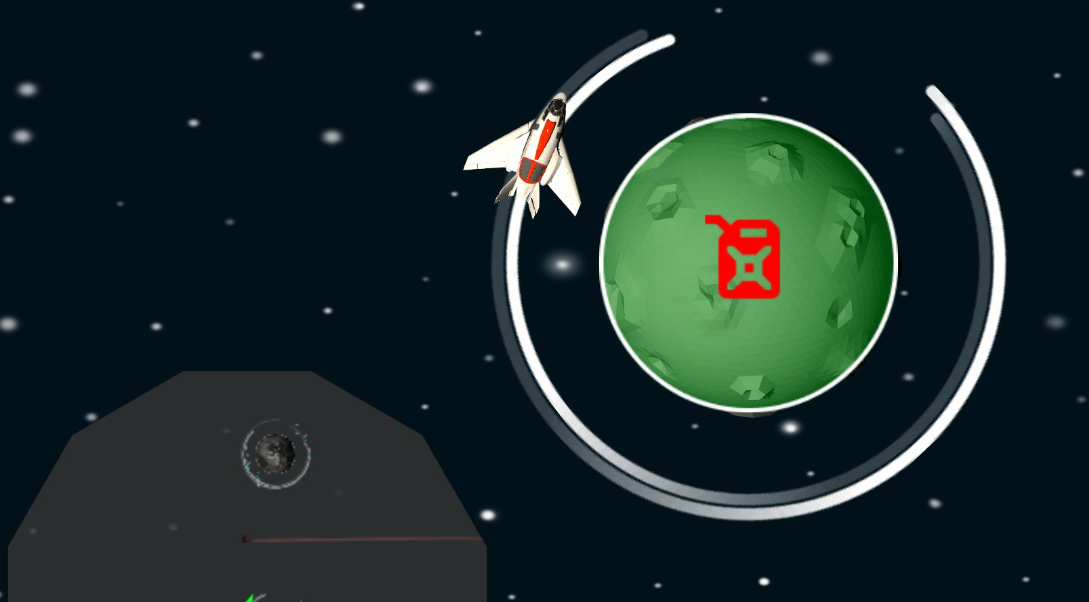
You thought there are no video game developers at ETH? WRONG! In this blog we’ll feature some projects made by ETH students. Our first interview is with John Adam Bingham about his game 'Galactic Sling', which started as a school assignment and turned into a passion project. It's a fun mobile game where you race through space while also managing your fuel reserves and evading aliens. The process of making and releasing a game seems straight forward but a lot of challenges presented themselves along the way. Here is how this process went.
What was the inspiration behind the theme and gameplay?
It was a school project where we had to make a space themed game. Originally, you'd explore an entire map with different planets, but it turned out to be too complicated, so we pivoted to an online game. We wanted to use gravity and slingshotting mechanics to teach kids how gravity works. We also thought space travel and exploration is cool.
Who were your collaborators?
Elias Gerber and I continued developing Galactic Sling after the school project had wrapped up and our friend Milo Tobler composed some music for us. The intensity of the music even changes as the aliens approach your spaceship.
Which game engine did you use and was it a good choice?
We used Unity because it was required. We were happy with it; it has lots of support and documentation and it has more complex features than Godot. The licensing is chill and I would use it again.
Where are your assets from?
At first, we used assets from a public library, but the designs didn’t fit together so we designed the final ones ourselves. It was a fun process, and the custom assets really brought the game together. We chose a low poly style because it’s simpler to make and it also fit our aesthetic vision.
What were your biggest problems during development?
We underestimated how much time it would take; the first 80% of the game took 20% of the time while the last 20% of the game took 80% of the time. It felt like there was little more to do but we underestimated how long small optimisations like buttons such as reset, menu and retry would take. Those were done last because they weren't essential to the core gameplay and the school project. The finishing touches took 80% of the time, which we did not expect
What should you have done differently?
We should have had a better plan. We just developed features because it was fun, but you should know what’s necessary for the final product from the beginning. We didn’t prioritize the right features.
How long did the project take?
Of course, a game is never done, but until the first release it took about 1.5 years, though we didn’t work on it fulltime.
Which aspects of the game changed between the school project version and the published version?
The fundamental game ideas stayed the same. The original game was too hard to play, and the graphics were terrible, so we improved on those aspects. We also introduced upgrades to the spaceship and power-ups. Rings around the planets were added to help with orientation. In the first iteration there was no time pressure, so we added an alien ship that chases you, which was a challenge, since it’s hard to get the timing right.
What was your motivation behind publishing the game?
When we presented the project, everyone liked it and other friends wanted to see what we programmed. We published it to share the game we had spent so much time on.
What was the publishing process like?
Harder than expected. We chose the App Store because the gameplay took a mobile first approach. It took us a month to set up the required accounts. The hardest part was Google Play because while the App Store is mostly just expensive, on Android you're required to have 50 game-testers for three weeks and we got rejected once because the 50 testers didn't play Galactic Sling for long enough and the second attempt took a long time again.
How high is the revenue?
Terrible. We made 10 CHF in total. For AD revenue you need 1’000 monthly users and Galactic Sling is more of a one-time game to play.
Was making the game worth it?
Absolutely, it was super fun, both the programming and getting to share it with friends. Financially it was not, it would need even more effort than we put in, and the market is very competitive.
Galactic Sling is available on the App Store and Google Play.
Are you working on something related to game development, digital art or game engines in general that deserves to be seen? Write us an email or reach out to us on discord to be featured next!